
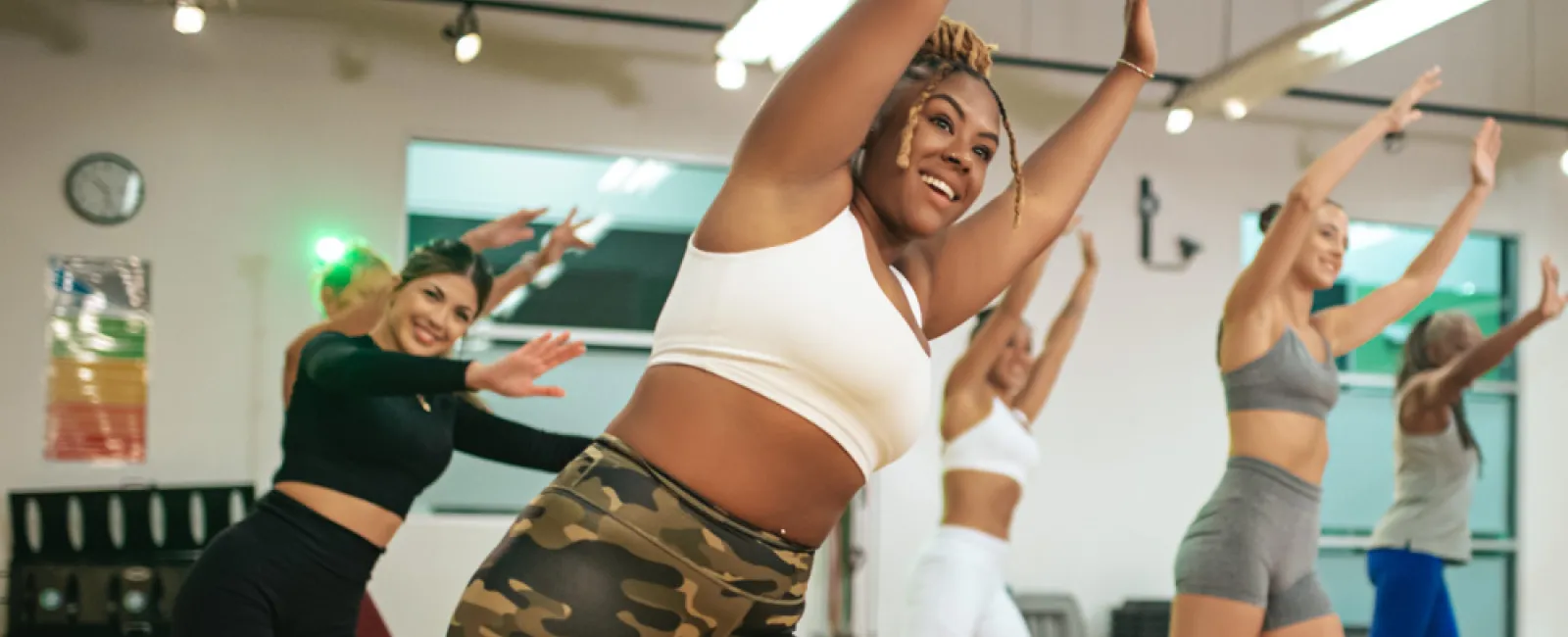
Let me take you back to a Tuesday evening class I taught a few years ago. In walked "Elias," a successful software engineer in his mid-40s. Elias spent his days solving complex coding problems, but he confessed that lately, he felt a creeping mental fog. He was forgetting names, struggling to focus during meetings, and felt generally "sharpness-dull." He had tried crossword puzzles and brain-training apps, but they felt like chores. He came to the dance studio not because he wanted to be a performer, but because his doctor suggested he "move more."
During the first 15 minutes, Elias was a mess of tangled feet and missed beats. He was frustrated. But then, something shifted. He stopped overanalyzing the steps and started listening to the bassline. By the end of the hour, he was sweating, smiling, and — most importantly — his brain was lit up like a Christmas tree. Six months later, Elias didn't just have better rhythm; he reported that his focus at work had returned, his memory was sharper, and his stress levels had plummeted.
Elias discovered what neuroscientists have been uncovering in labs over the last decade: Dance is not just exercise for the body; it is a heavy-duty workout for the brain. While running or cycling allows the mind to wander, dance requires a unique, split-second integration of sound, spatial awareness, and motor control. It is arguably the most cognitively demanding physical activity you can do.
The Neuroscience of the Groove: Why Dance is Different
To understand why dance is superior for cognitive health, we must look under the hood of the human skull. When you dance, you aren't just engaging the Motor Cortex (which controls movement); you are engaging a massive neural network simultaneously.
The Hippocampus and Neurogenesis
The star of the show here is the Hippocampus, the part of the brain responsible for memory and learning. For a long time, scientists believed that we were born with a set number of brain cells and that was it. We now know that the brain is plastic — meaning, it can change and grow. This process is called Neurogenesis, the creation of new neurons.
Dance, specifically learning complex choreography, is a potent trigger for neurogenesis. Unlike repetitive exercise (like walking on a treadmill), which is great for blood flow, dance requires real-time decision making and pattern recognition. You have to remember the step, anticipate the next beat, and coordinate your limbs. This demand stimulates the production of Brain-Derived Neurotrophic Factor (BDNF). Think of BDNF as "Miracle-Gro" for your brain. It is a protein that supports the survival of existing neurons and encourages the growth of new synapses and neurons, particularly in the hippocampus.
Proprioception and The Cerebellum
While the cerebrum handles the "what" of the movement ("step left"), the Cerebellum handles the "how" (balance, timing, and coordination). This creates a heightened state of Proprioception — your body's ability to sense its position in space without looking.
In our sedentary, screen-focused lives, our proprioceptive skills atrophy. We forget where our bodies end and the chair begins. Dance forces us to reconnect. You must judge the distance between your foot and the floor, the space between you and your neighbor, and the velocity of your arm swing. This rapid-fire processing strengthens neural pathways between the brain and the peripheral nervous system, improving reaction times and reducing the risk of falls as we age.
Ignite Your Brain Power
Ready to flood your brain with BDNF and feel the mental clarity that comes with movement? Don't just read about it — come experience it! Click here to register for a complimentary 3-Day Pass to YouFit Gyms, where you can jump into a Zumba class and start dancing your way to a smarter brain today.
How Does Dance Improve Cognitive Health?
Dance improves cognitive health by integrating physical exercise with sensory and cognitive challenges, a combination that stimulates global brain connectivity. Unlike repetitive aerobic exercises, dance requires the simultaneous processing of music (auditory cortex), spatial navigation (parietal lobe), and motor execution (frontal lobe).
This multi-tasking demand increases the volume of the hippocampus—the brain's memory center—and boosts the secretion of Brain-Derived Neurotrophic Factor (BDNF), a protein that repairs brain cells and facilitates the growth of new neural connections. Consequently, regular dance practice has been shown to enhance working memory, improve processing speed, and significantly reduce the risk of neurodegenerative diseases like dementia.
Current Trends: The Rise of "Cognitive Cardio"
The fitness world is currently seeing a massive shift away from "mindless" cardio toward "mindful" movement. We see this in the popularity of Functional Training and the "Flow State" discussions in biohacking circles. Dance fitness sits perfectly at the intersection of these trends.
Functional Training Alignment
Functional training is about preparing the body for daily life. Dance is inherently functional. It involves multi-planar movement. Most gym exercises are sagittal (moving forward and back, like running or lunging). Dance moves in all three planes: sagittal, frontal (side-to-side), and transverse (rotational).
- Rotational Power: Life requires rotation—putting groceries in the car, swinging a golf club, picking up a child. Dance creates a resilient core and spine by constantly training rotation.
- Agility and Balance: The weight shifts in a Salsa or Hip-Hop step train the small stabilizer muscles around the ankles and knees, preventing injuries in a way that the leg press machine cannot.
The "Flow State" and Mindfulness
You can’t worry about your email inbox when you are trying to keep up with a fast-paced Zumba track. Dance forces a state of "Flow" — a mental state of complete absorption in the current activity. This is dynamic mindfulness. It lowers cortisol (the stress hormone) and creates a neurological reset, similar to meditation but with a higher caloric burn.
Practical Applications — Strategies for "Smart" Movement
You don't need to be a professional dancer to reap these benefits. The goal is cognitive novelty, not perfection. Here is how to incorporate dance-based cognitive challenges into your routine.
1. Embrace the "Ugly" Phase of Learning
Many people avoid dance classes because they feel uncoordinated. Biologically, that feeling of "I don't get it yet" is exactly where the magic happens. That friction is your brain forging new pathways.
Commit to a new class format (like Zumba or a Hip-Hop cardio class) and promise yourself you will stay for at least 3 sessions. The first session is for shock, the second for recognition, and the third for mastery. When you master a routine, the cognitive load drops. To keep your brain sharp, you actually need to constantly switch up the styles or routines.
2. Cross-Lateral Movements
One of the most powerful things about dance is crossing the midline. This refers to moving a limb across the center of your body to the opposite side (e.g., reaching your right hand to your left foot).
- The Science: The left hemisphere of the brain controls the right side of the body, and vice versa. Crossing the midline forces the two hemispheres to communicate across the Corpus Callosum (the bridge between the brain halves). This improves bilateral coordination and reading comprehension.
- The Drill: In your warm-ups, incorporate "cross-crawls" (touching opposite elbow to opposite knee) or Grapevine steps. These simple patterns wake up the whole brain.
3. Rhythm as a Cognitive Anchor
Rhythm acts as a scaffold for motor control. This is known as Rhythmic Auditory Stimulation (RAS). The beat provides a predictive cue that helps the brain organize movement.
- Strategy: If you are struggling with a workout, add a strong beat. Don't just listen to a podcast. Use music with a BPM (Beats Per Minute) that matches your intensity. Try to step exactly on the beat. This precision transforms a physical slog into a cognitive game.
Join the Party! YouFit Group Fitness
Step out of your comfort zone and into the rhythm. YouFit Gyms offers a variety of group fitness classes, including Zumba, that are designed to challenge your body and your mind. Grab your Free 3-Day Pass here and see which beat moves you.
Beyond the Studio: Nutrition for the Dancing Brain
Just as you fuel your muscles, you must fuel your nervous system for high-coordination activities.
Choline: The Neurotransmitter Builder
Acetylcholine is the neurotransmitter responsible for muscle contractions and focus.
- Sources: Eggs (specifically the yolks), liver, and soybeans. Eating these prior to a choreography-heavy session can help improve your ability to retain the steps.
Hydration and Reaction Time
Even mild dehydration (1-2%) can significantly impair cognitive function and reaction time. In a dance class, a slowed reaction time means tripping over your own feet.
- Strategy: Electrolytes are key. Water alone often passes through too quickly. Add a pinch of sea salt and lemon to your water, or use a low-sugar electrolyte mix to maintain the electrical gradient your nerves need to fire signals efficiently.
FAQ: Neuro-Kinetic Training, Dance, and Cognitive Health
Q: I have "two left feet." Will I still get the cognitive benefits if I'm bad at dancing?
Yes, in fact, you might get more. The cognitive benefit comes from the effort of learning and the process of error correction. If the class is too easy, your brain goes on autopilot. Struggling to find the beat and correcting your movement triggers more synaptic activity than perfectly executing a routine you’ve known for years. Embrace the clumsiness; it’s a sign your brain is working hard.
Q: How often do I need to dance to see changes in my brain?
A: Research suggests that consistency is key. A study published in the New England Journal of Medicine found that frequent dancing (3-4 times a week) offered the highest protection against dementia compared to other physical activities. However, even one session can elevate mood and focus for hours afterward due to the immediate release of dopamine and serotonin.
Q: Is Zumba really "neuro-kinetic" training?
Absolutely. Neuro-kinetic training simply refers to exercise that improves the communication between the nervous system and the muscular system. Zumba requires you to translate visual cues (watching the instructor) and auditory cues (hearing the music) into complex motor output (moving your body) instantly. It is a quintessential neuro-kinetic workout that trains agility, coordination, and memory simultaneously.
Q: Can dance help with stress-related brain fog?
Yes. Dance lowers cortisol levels while raising endorphins.25 Unlike linear exercises (like running on a treadmill), which allow you to ruminate on stressful thoughts, dance requires full cognitive presence. This break from rumination allows the "default mode network" of the brain to reset, often clearing the "fog" and allowing for better problem-solving capability after the workout.
Q: I'm an older adult. Is it safe for me to start dance fitness now?
A: Dance is one of the best activities for older adults because it is weight-bearing (good for bone density) and improves balance (reducing fall risk).26 However, it is always best to start at your own pace. Look for "Gold" classes or low-impact modifications where you keep one foot on the floor at all times to protect joints while still getting the cognitive benefits of the choreography.
