
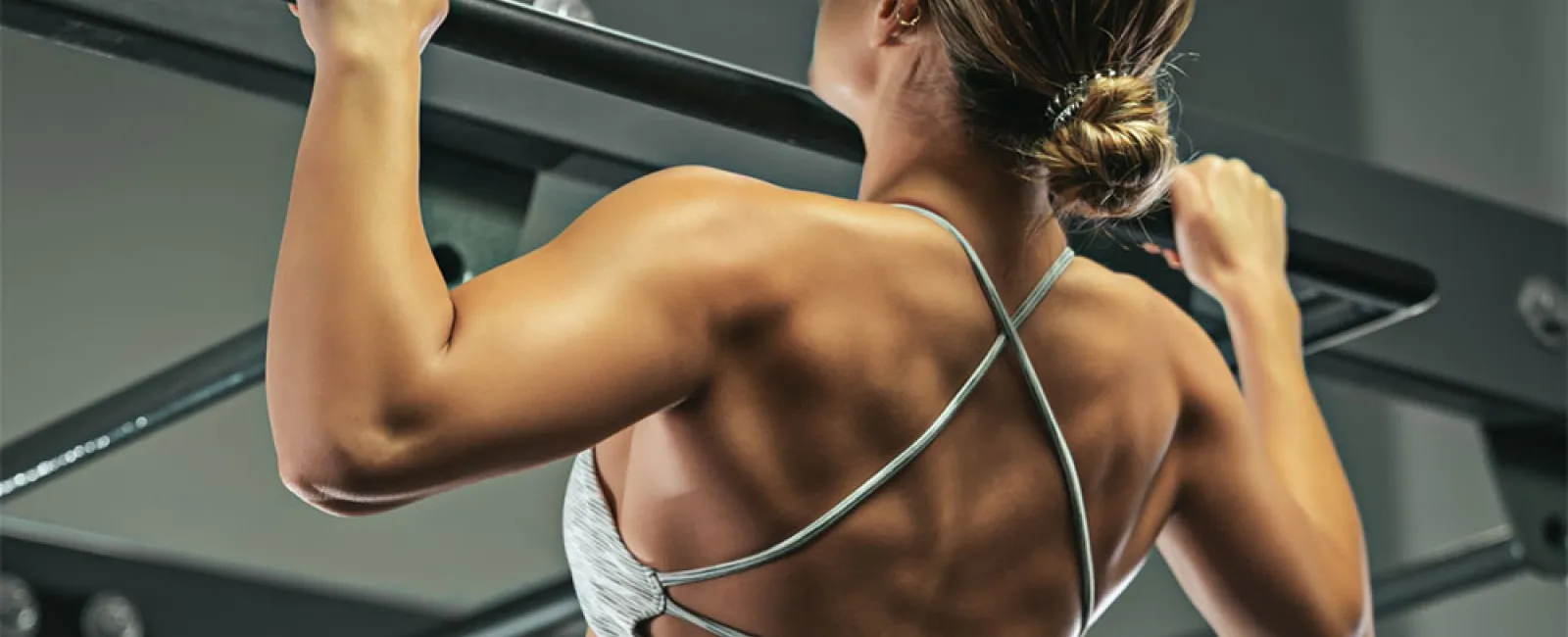
A pull-up is one of those exercises that feels impossible until it isn't.
One day you can't do one. Then you can do one. Then you can do several. You're crushing it.
But it's that jump from zero to one that's usually the hardest part — and it's entirely achievable in six weeks with the right approach.
Here's the program.
Why Pull-Ups Are Worth the Effort
A pull-up is a compound movement — it works your lats, biceps, rear deltoids, rhomboids, and core simultaneously. It's one of the most efficient upper-body exercises you can do, it requires no equipment beyond a bar, and it doubles as a reliable benchmark of functional strength. Once you can do one, you'll want to do ten.
What You'll Need
- A pull-up bar (every YouFit has several)
- A resistance band (for assisted reps — available at the gym)
- Access to a lat pulldown cable machine
- Three sessions per week
The 6-Week Program
Weeks 1-2: Build the Foundation
Your body needs to learn the movement pattern and start building the relevant muscle groups before you can pull yourself over a bar. This phase focuses on two exercises:
Dead Hangs — Jump up, grip the bar with both hands shoulder-width apart (palms facing away), and simply hang. Don't swing. Let your shoulders fully engage and hold. Do 3 sets of 20-30 seconds. This builds grip strength and gets your shoulders used to bearing your full body weight.
Lat Pulldowns (Cable Machine) — Set the weight to about 60-70% of what feels challenging. Pull the bar down to your upper chest, hold briefly, and return slowly. Do 3 sets of 10-12 reps. This trains the exact muscles you'll use in a pull-up, in the exact movement pattern, without fighting gravity.
Do both exercises every session, three sessions per week.
Weeks 3-4: Assisted Pull-Ups
Now you get on the bar. Loop a resistance band over the pull-up bar, place one knee (or both feet) in the loop, and perform pull-ups with the band supporting a portion of your weight. The thicker the band, the more assistance it provides — start with more support and use a lighter band as you get stronger.
Assisted pull-ups: 3 sets of 5-8 reps, full range of motion. Chin clears the bar at the top; arms are nearly straight at the bottom. Rest 90 seconds between sets.
Keep doing lat pulldowns (3 sets of 10) and dead hangs (3 sets of 30 seconds) as warm-up and supplemental work.
Weeks 5-6: The Transition
This is where it comes together. Start each session with 2-3 attempts at an unassisted pull-up. You may not get all the way up yet — and that's fine. The attempt itself is training. Even a partial rep (getting your chin close) builds the strength you need.
Then move to: 2 sets of assisted pull-ups (lighter band than week 4), 2 sets of lat pulldowns, and finish with negative pull-ups.
Negative pull-ups: Jump or step up so your chin is above the bar, then lower yourself as slowly as possible — aim for 5 full seconds on the way down. Do 3 reps. Negatives build pull-up strength faster than almost anything else.
By the end of week 6, most people doing this program consistently will complete their first unassisted pull-up. Some will get there in week 5. Some in week 7. The timeline is less important than the progression.
A Few Notes
- Rest days matter. Your back and biceps need recovery time. Three sessions per week with a day off between each is the structure — don't try to speed it up by going every day.
- Form over everything. A half-rep with good form is better than a full rep with a swinging, shrugging mess. Pull with your back, not just your arms.
- The first rep is not the last one. Once you can do one, two is closer than you think. Add one rep per session and you'll be doing sets of five before long.
Not sure about your form? A YouFit trainer can walk you through the movement in your free fitness assessment. It takes ten minutes to learn it right and saves you weeks of reinforcing bad habits.
