The Court — What You're Looking At
The Layout
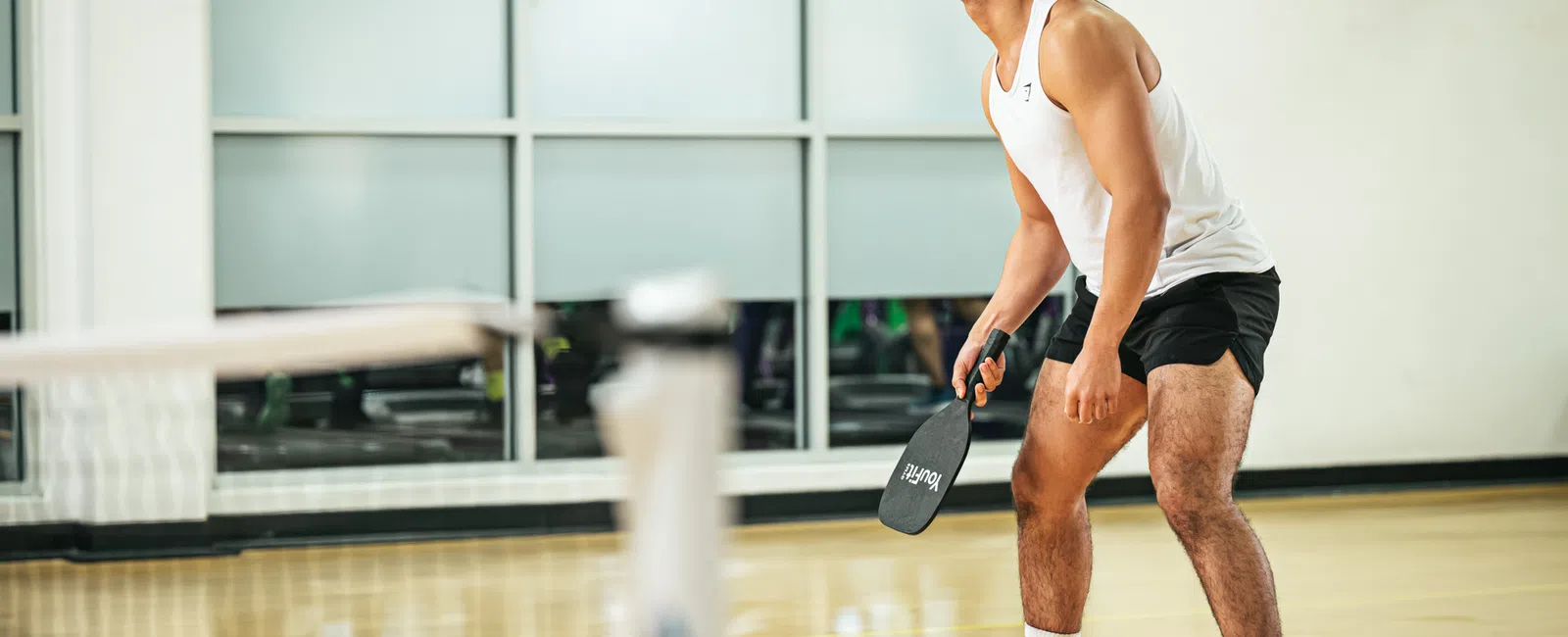
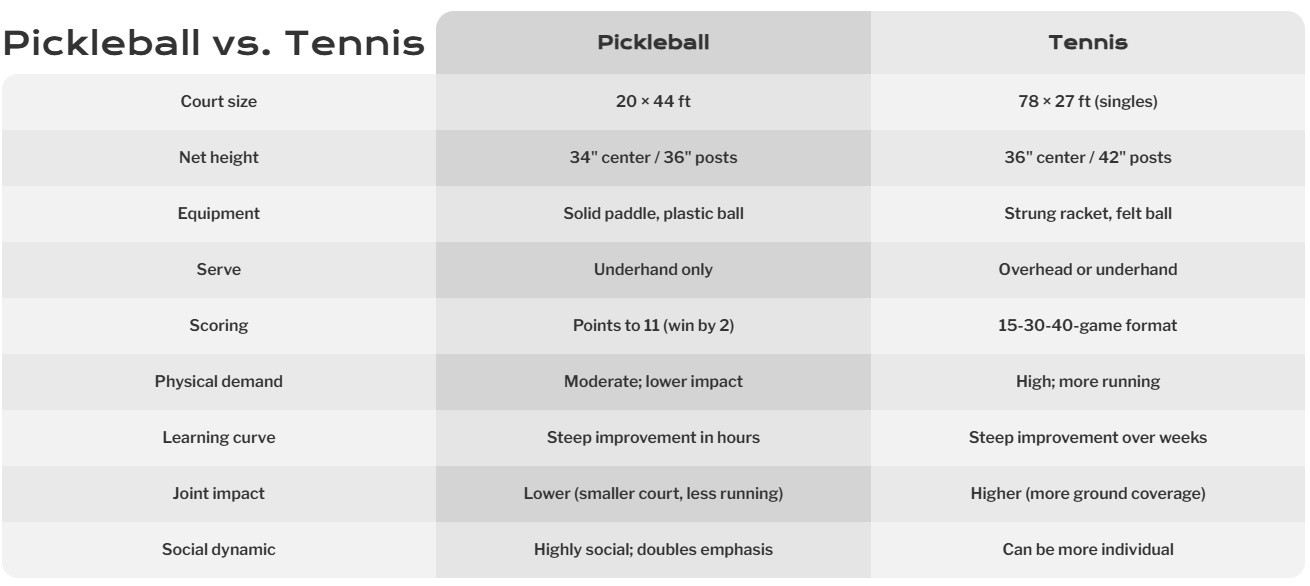
A pickleball court is 20 feet wide and 44 feet long — roughly a third the area of a tennis court. It's divided by a net that hangs 34 inches at the center and 36 inches at the posts. Each side is divided into a service area and the non-volley zone, universally known as the kitchen — a 7-foot rectangle adjacent to the net that governs a significant portion of pickleball strategy.
The lines you need to know: the baseline (back of the court), the sidelines (edges), the centerline (divides the two service boxes), and the kitchen line (the most strategically important line on the court).
The Equipment
- Paddles: Solid (no strings), typically made from composite, graphite, or wood. Lighter paddles offer more control; heavier paddles add power. For beginners, mid-weight composite is the standard recommendation.
- Balls: Hard plastic, perforated. Outdoor balls have smaller, more numerous holes for wind resistance; indoor balls have larger holes for softer play on gymnasium floors. At YouFit, [indoor/outdoor ball type: confirm with local clubs].
- Shoes: Court shoes with lateral support are ideal. Running shoes work in a pinch but don't offer the sideways stability that pickleball's quick lateral movement requires.
What you don't need: A background in racket sports, significant upper body strength, or any particular coordination level you don't already have.
The Pickleball Rules
Simpler Than They Look
Pickleball has a reputation for having one confusing rule. It does. The rest is straightforward.
Serving
The serve is always underhand, with contact made below waist level. You serve from behind the baseline, diagonally cross-court into the opposite service box. The ball must clear the kitchen (land past the kitchen line) to be a valid serve. In doubles, both players on the serving team get to serve before the serve passes to the opponents — except on the very first serve of the game, where only one player serves before the pass.
The Two-Bounce Rule
This one is fundamental and catches new players off guard. After the serve, the receiving team must let the ball bounce before returning it. Then the serving team must also let that return bounce before playing it. After those two bounces have occurred, both teams can volley freely. This rule is specifically designed to prevent the serving team from rushing the net immediately after serving — it opens up the game and creates longer rallies.
The Kitchen
You cannot volley (hit the ball before it bounces) while standing in the kitchen or on the kitchen line. You can step into the kitchen to play a ball that has already bounced there — but you must exit the kitchen before volleying again. This is the rule that defines pickleball strategy more than any other. The kitchen slows down the net game and rewards touch and placement over power.
Scoring
Only the serving team can score points. If the receiving team wins the rally, they win the serve — not a point. Games are typically played to 11 points, and you must win by 2. Tournament play often uses games to 15 or 21 for some formats. In doubles, the serving team announces three numbers before each serve: server score, receiver score, and which server is serving (1 or 2).
Faults
A fault ends the rally. Faults include: hitting the ball out of bounds, hitting the net, volleying from the kitchen, failing to clear the kitchen on the serve, and letting the ball bounce twice before returning it. The team that commits the fault loses the rally.
How To Actually Get Started
From Zero to First Game
Watching before playing is worth more than you'd expect. You'll absorb the rhythm of the game, the sound of the ball, how people move on the court, and what a dink looks like in practice. Search "pickleball beginner rally" and watch a few points before you ever pick up a paddle.
Get Your Hands on a Paddle
You don't need to buy equipment before your first game. Many facilities (including YouFit clubs with pickleball courts) have loaner paddles and balls available. If you decide you love it and want your own: budget $40-$80 for a solid beginner composite paddle. Don't overspend until you know your preferences.
Find a Beginner Game or Clinic
Open play is welcoming in the pickleball world — more so than most sports. But a beginner clinic or "rec play" session specifically marketed to newcomers is the lowest-pressure entry point. YouFit's pickleball programming is designed for exactly this.
Learn About The Two-Bounce Rule and The Kitchen Before You Play
These are the two rules that catch everyone off guard. Knowing them going in means you can focus on actually playing instead of stopping to ask, "Wait, was that allowed?" Read the accordion above one more time. You've got it.
Play Your First Point
It will feel chaotic. The ball will go places you didn't intend. That's fine. Your job in game one isn't to win. It's to get a feel for the court, the paddle, and the ball. The learning curve in pickleball is genuinely fast — most people feel meaningfully more competent by the end of their first hour than they did at the start.
Come Back
The first session plants the seed. The second session is where the fun really starts. Make a plan to play again within a week of your first game, while the muscle memory is still fresh.
The Strategy — Even Beginners Should Know This
You don't need advanced strategy on day one. But you do need to know one thing: the kitchen is where pickleball is won and lost.
The central strategic goal in pickleball is to reach the kitchen line and control the net — while preventing your opponents from doing the same. The kitchen exists specifically to complicate this. Dinking — a soft, controlled shot that lands in the kitchen and forces your opponent into a difficult low return — is the foundational skill that separates developing players from beginners.
Power is less important in pickleball than in tennis. A hard-hit ball is easier to deal with than a precisely placed soft one. The players you'll envy on the court aren't the ones swinging the hardest. They're the ones who seem impossibly calm at the net, redirecting everything gently and watching their opponents scramble.
Why So Many Adults Are Playing Pickleball
The demographic story is real: pickleball grew up as a sport for older adults before it went mainstream, and there are good reasons it resonated with that group first. The smaller court means less running without less competition. The lower net and underhand serve are accessible to people with shoulder limitations. The emphasis on strategy over power levels the playing field between players of different athletic backgrounds.
But the social dimension is probably the most underrated piece. Pickleball is genuinely better with other people in a way not all sports are. Doubles is the default format. The court is intimate enough that you're talking to your opponents between points. The culture of the sport has stayed warm and welcoming even as it's exploded — beginners are invited in rather than sorted to the edges.
For adults who've found it harder to maintain active social lives as they've gotten older, pickleball has become something more than sport. It's shown up in retirement communities, corporate wellness programs, community centers, and gyms like YouFit because it solves a surprisingly large problem: it gives people a reason to show up regularly, move their bodies, and be around other humans who are glad they came.
The Pickleball Cheat Sheet
Tear this out. Tape it to your paddle.
- The Court: Badminton-sized. 20 ft × 44 ft. Same for singles and doubles.
- The Net: 34 inches at the center, 36 inches at the posts.
- The Kitchen: The 7-foot non-volley zone on each side of the net. Don't step in it to volley. This is the rule everyone forgets.
- Scoring: Only the serving team scores. Games to 11, win by 2. In doubles, each player serves before the serve passes — except on the very first serve of the game.
- The Two-Bounce Rule: After the serve, each team must let the ball bounce once before volleying. After those two bounces, volleys are fair game.
- Faults (How You Lose a Rally): → Ball lands out of bounds → Ball hits the net → You volley from the kitchen → Ball bounces twice on your side
- The Most Important Rule: Have fun. It's in the unofficial rulebook on every court.